



OS pris en charge

Prise en charge de l'OS primaire

Nombreux systèmes d'exploitation Windows :

  • Windows Vista Édition Familiale Basique
  • Windows Vista Édition Familiale Premium
  • Windows Vista Édition Professionnelle
  • Windows Vista Entreprise
  • Windows Vista Édition Intégrale
  • Windows 2003 Édition Standard SP0, SP1
  • Windows 2003 Édition Standard SP0, SP1
  • Windows 2003 Édition Standard SP0, SP1
  • Windows XP Édition professionnelle SP2
  • Windows XP Édition Familiale SP2
  • Windows XP Professionnelle SP4
  • Windows 2000 Serveur SP4

REMARQUE : Dans le cas d'un OS primaire Windows, Internet Explorer version 5.0 ou plus doit être installé.

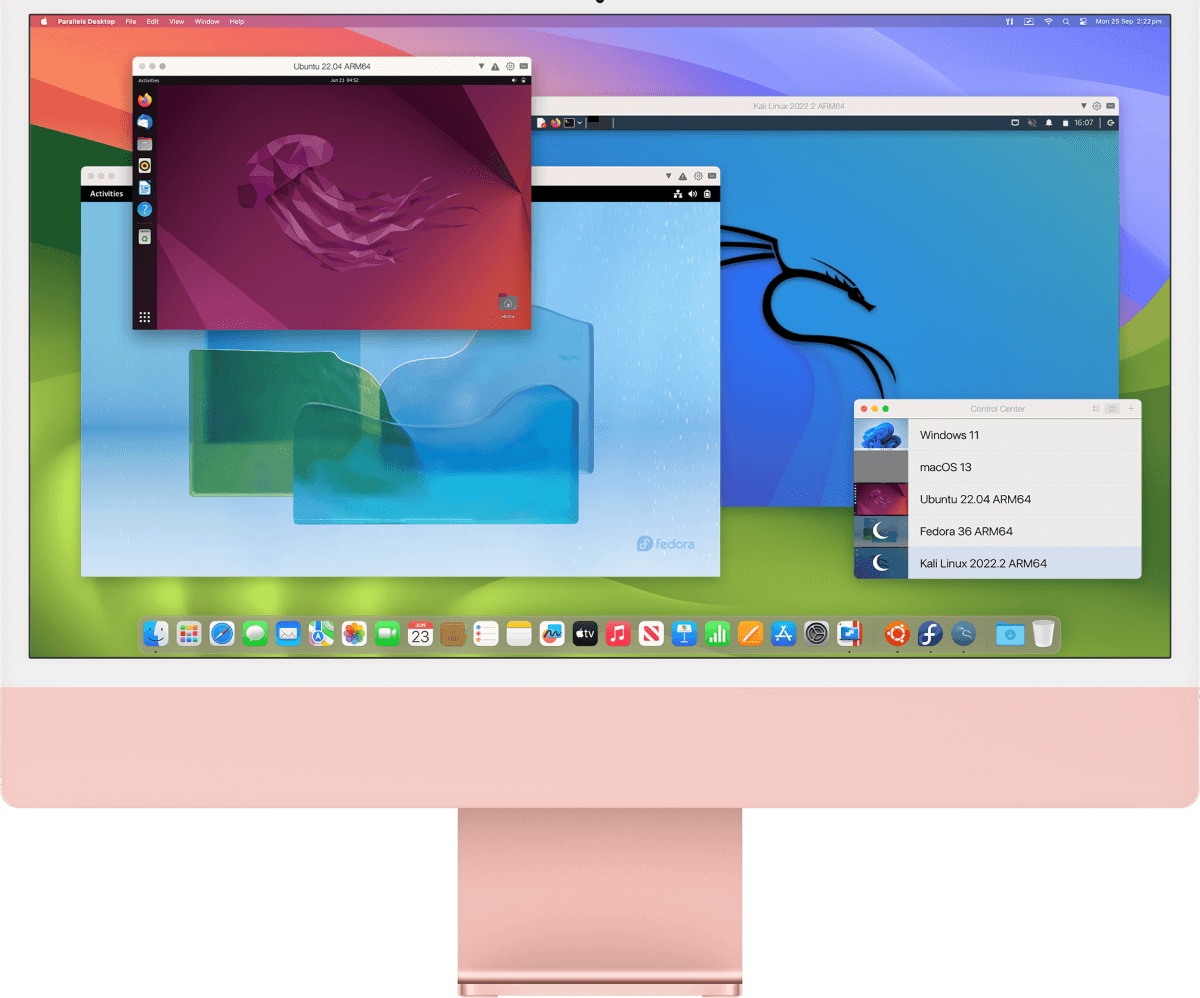
Nombreux systèmes d'exploitation Linux :

  • Fedora Core Linux 4 stock 2.6.11-1,1369_FC4
  • Red Hat Enterprise Linux WS4 stock 2.6.9-5
  • Red Hat Enterprise Linux AS4 stock 2.6.9-5
  • Red Hat Enterprise Linux ES4 stock 2.6.9-5
  • Red Hat Linux 9 stock 2.4.20-8
  • Debian Linux 3,1 stock 2.6.8-2-386
  • SUSE Linux 10,0 stock 2.6.13-15
  • SUSE Linux 9,3 2.6.11.4-20a
  • SUSE Linux 9,2 stock 2.6.8-24,11
  • SUSE Linux 9,1 stock 2.6.4-52
  • Mandriva Linux 10 stock 2.6.3-7
  • Xandros Linux 4,0

REMARQUE : Si vous utilisez un OS primaire Linux, les packs logiciels suivants doivent être installés :

  • Les sources du noyau installé actuellement (si vous n'avez pas installé le noyau manuellement, alors vous devez installer un pack de sources noyau à partir de votre distribution) ;
  • glibc [glibc]
  • gcc [gcc] (inclus dans n'importe quel pack de développement)
  • Système X Windows comprenant :
    • extension xf86vidmode (pour les écrans pleins uniquement)
    • extension XKB (pour les architectures clavier nationales et le support de leds)
  • librairie à unité d'exécution multiple QT 3,0,5 [qt3]
 

Prise en charge des OS invités

Nombreux systèmes d'exploitation Windows :

  • Windows Vista Édition Professionnelle
  • Windows Vista Entreprise
  • Windows Vista Édition Intégrale
  • Windows 2003 Édition Standard SP0, SP1
  • Windows 2003 Édition Standard SP0, SP1
  • Windows 2003 Édition Standard SP0, SP1
  • Windows XP Édition Professionnelle SP0, SP1, SP2
  • Windows XP Édition Professionnelle SP0, SP1, SP2
  • Windows XP Édition Professionnelle SP4
  • Windows 2000 Serveur SP4
  • Windows 2000 Serveur Avancé SP4
  • Windows NT Workstation 4,0 SP6
  • Windows NT Serveur 4,0 SP6
  • Windows ME
  • Windows 98
  • Windows 95
  • Windows 3,11
  • Windows 3,1

Nombreux systèmes d'exploitation Linux :

  • Fedora Core Linux 3, 4
  • Red Hat Enterprise Linux WS3, WS4
  • Red Hat Enterprise Linux AS4
  • Red Hat Enterprise Linux ES3, ES4
  • Redhat Linux 7,3, 8, 9
  • Debian Linux 3,1
  • SUSE Linux 9,0, 9,1, 9,2, 9,3
  • Mandriva Linux 9,2, 10, 10,1
  • Xandros Linux 4,0

FreeBSD :

  • FreeBSD 4,1, 4,3, 4,5, 5,4

Nombreux systèmes d'exploitation en provenance de la famille OS/2 et eComStation :

  • OS/2 warp 3, 4, 4,5
  • eComStation 1,1, 1,2

Sun Solaris :

  • Sun Solaris 9, 10

MS-DOS :

  • MS-DOS 6,22


Pour les particuliers
Pour les entreprises
Pour les hébergeurs
Pour le SaaS
Pour les développeurs
 
Virtualisation de Desktops
- Parallels Desktop pour Mac
- Parallels Desktop pour Mac Premium
- Parallels Workstation
Virtualisation de serveurs
- Parallels Server
- Parallels Server pour Mac
- Parallels Virtuozzo Containers
- Parallels Infrastructure Manager
Automatisation
- Parallels System Automation
- Parallels Business Automation
- Parallels Plesk Products
Autres produits